December 12, 2025 – Dr. Susanna Kokkonen
Vayeshev 5786 (2025)
Genesis 37:1-40:23; Amos 2:6-3:8.
Vayeshev, the name of this Torah portion “and he dwelt” refers to Jacob settling in Hebron. It is really the story of Jacob’s family, his sons, and their relationships. What we all remember as a unique and important story is the story of Joseph. This Torah Portion starts the story of Joseph and his brothers and continues the familiar narrative of sibling jealousy, speech and then as a result action with long-lasting consequences.
The root of everything that happened was Jacob’s special love for Rachel and by extension for Joseph, her son. The evil that took place in the family came at least partly from Jacob favoring one son over others.
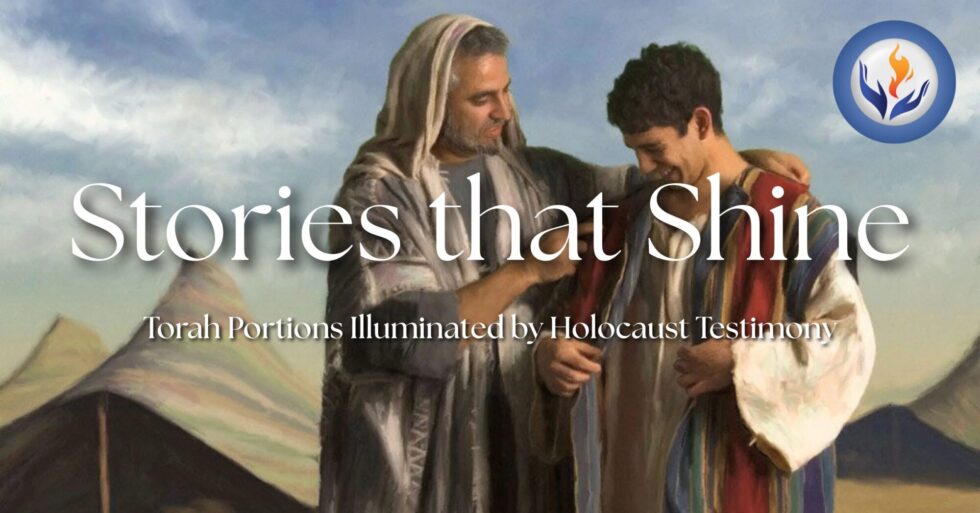
“Now Israel loved Joseph more than any of his other sons, because he had been born to him in his old age; and he made an ornate robe for him.
When his brothers saw that their father loved him more than any of them, they hated him and could not speak a kind word to him.” (Genesis 37:3-4 NIV)
A Dreamer
During this already challenging time between himself and his brothers, Joseph had a dream and recounted it to his brothers. God appeared to Joseph. He saw what would happen in the future. This means that Joseph had a prophetic dream and a prophetic gift. But the premature telling of his dreams resulted in more anger and jealousy.
“When he told his father as well as his brothers, his father rebuked him and said, “What is this dream you had? Will your mother and I and your brothers actually come and bow down to the ground before you?”
His brothers were jealous of him, but his father kept the matter in mind.” (Genesis 37: 10-11 NIV)
By telling the dreams Joseph angered his brothers so much that when the opportunity came, they were willing to kill him or to sell him. The exception was the firstborn Reuben who was planning to rescue Joseph.
“When Reuben heard this, he tried to rescue him from their hands. “Let’s not take his life,” he said.” (Genesis 37:21 NIV)
In Reuben’s absence the other brothers sold Joseph to be a slave. They then returned to their father Jacob pretending that an animal had killed Joseph.
“They took the ornate robe back to their father and said, “We found this. Examine it to see whether it is your son’s robe.”
He recognized it and said, “It is my son’s robe! Some ferocious animal has devoured him. Joseph has surely been torn to pieces.” (Genesis 37:32-33 NIV)
Joseph in Egypt
The journey of Joseph led him to serve a high-ranking Egyptian. The godly young man was successful to the extent that his owner trusted him with all his affairs.
“When his master saw that the LORD was with him and that the LORD gave him success in everything he did, Joseph found favor in his eyes and became his attendant. Potiphar put him in charge of his household, and he entrusted to his care everything he owned.” (Genesis 39:3-4 NIV)
Things were going well except that the wife of Potiphar started acting in a very wicked manner toward Joseph. Joseph spoke to her in a godly way.
“No one is greater in this house than I am. My master has withheld nothing from me except you, because you are his wife. How then could I do such a wicked thing and sin against God?” (Genesis 39:9 NIV)
Enraged she made up a story about Joseph. He was duly taken to prison. Some commentators have suggested that had Potiphar really believed in his wife, he would have had Joseph decapitated. So putting him in prison instead may have meant that he did not fully believe his wife.
Once in prison, Joseph again behaved in such an exemplary manner that the warden put him in charge of everything. This is how he came to know two prominent figures: Pharaoh’s baker and cupbearer, both now imprisoned. Our Torah portion ends with the cupbearer freed and brought back to Pharaoh. This happened according to Joseph’s interpretation of the cupbearer’s dream.
But sadly what happened next is an enduring lesson in human behavior. The cupbearer forgot Joseph when he was free.
“The chief cupbearer, however, did not remember Joseph; he forgot him.” (Genesis 40:23 NIV)
Amos
In the prophetic portion prophet Amos refers to what happened to Joseph but in a larger context.
“This is what the LORD says: “For three sins of Israel, even for four, I will not relent. They sell the innocent for silver, and the needy for a pair of sandals.” (Genesis 2:6 NIV)
Following sin and its punishment, God confirms that He allows men to know about the future. Joseph had this same gift and here God confirmed that He would tell men about His plans.
“Does a lion roar in the thicket when it has no prey? Does it growl in its den when it has caught nothing? Does a bird swoop down to a trap on the ground when no bait is there? Does a trap spring up from the ground if it has not caught anything?
When a trumpet sounds in a city, do not the people tremble? When disaster comes to a city, has not the LORD caused it?
Surely the Sovereign LORD does nothing without revealing his plan to his servants the prophets.
The lion has roared— who will not fear? The Sovereign LORD has spoken— who can but prophesy?” (Amos 3:4-8 NIV)
A Modern Prophet
One cannot help but think about modern times and Jewish history.
In August 1897, Theodor Herzl, (1860-1904) the father of modern Zionism, was famously photographed in Basel, Switzerland. He had just convened the First Zionist Congress. Standing at the balcony, it was as if he was looking to the future. He said that if he would speak about a Jewish State at that time, people would think that he was mad. But he also said that in fifty years’ time it would happen. Between 1897 and 1947 there were so many huge things that took place.
In those fifty years WWI, WWII and the Holocaust all happened. Despair. Murder. Desperation.
But the truth of Herzl’s words stands.
The fact of the matter is that in November 1947, the United Nations voted about the partition of then British Mandate in Palestine. This was fifty years after Herzl spoke. Many see this vote as major source of international legitimacy and beginning of declaring an independent State of Israel.
What is Israel’s rebirth a sign of?
It is commonly thought that a fig tree is one of the trees associated with Israel. When speaking about the end of days, Jesus mentions the fig tree, as a sign. In other words, like Joseph we are to understand the signs of the times.
“Now learn this lesson from the fig tree: As soon as its twigs get tender and its leaves come out, you know that summer is near.” (Matthew 24:32 NIV)
This means that Israel is a sign. Jesus is not speaking about a natural tree nor about summer as a season. These things come and go. But there is a sign here and a lesson for us.
Watch the fig tree.
*For an explanation of the terms see the first The Torah Portion Blog.
And God said, “Let there be light,” and there was light.
Genesis 1:3 NIV
Your word is a lamp for my feet, a light on my path.
Psalm 119:105 NIV
Arise, shine, for your light has come, and the glory of the LORD rises upon you.
Isaiah 60:1 NIV
…let your light shine before others, that they may see your good deeds and glorify your Father in heaven.
Matthew 5:16 NIV
Torah Scrolls were attacked and desecrated during the Holocaust. The enduring images of the Kristallnacht (November 9-10,1938) are those of synagogues on fire and Torah Scrolls burning. Some of these desecrated Torah Scrolls disappeared, others were buried. Some were lovingly rescued and are on display in museums in various locations.
[author] [author_image timthumb='on']https://irw.duv.temporary.site/website_047320a9/wp-content/uploads/2025/09/dr-k.jpg[/author_image] [author_info]Dr. Susanna Kokkonen received her Ph.D. in Holocaust Studies from the Hebrew University of Jerusalem. For ten years Dr. Kokkonen was the Director of the Christian Friends of Yad Vashem, World Holocaust Remembrance Center in Jerusalem. Dr. Kokkonen has authored several books about the Holocaust and antisemitism. She educates Christian audiences worldwide including about the Jewish roots of their faith. Dr. Kokkonen is the author of the exhibits for the Holocaust Garden of Hope and serves the Holocaust Remembrance Association as Educational Advisor. [/author_info] [/author]