March 6, 2026 – Dr. Susanna Kokkonen
Ki Tisa 5786 (2026)
Exodus 30:11-34:35; Ezekiel 36:16-36
Ki Tisa, the name of this Torah portion refers to taking census, which happens at the beginning of the text. The word also refers to elevating.
“When you take a census of the Israelites to count them, each one must pay the LORD a ransom for his life at the time he is counted. Then no plague will come on them when you number them.” (Exodus 30:11 NIV)
Connected to the census taking, there are offerings. A very carefully defined amount of money was required.
“The rich are not to give more than a half shekel and the poor are not to give less when you make the offering to the LORD to atone for your lives.” (Exodus 30:15 NIV)
Interestingly, Jesus referred to a widow giving more than a rich person. I am wondering if this may reflect the fact that the same amount was more money for some? The widow is Jesus’ example of giving to us.
“He also saw a poor widow put in two very small copper coins…he said, “This poor widow has put in more than all the others…” (Luke 21:2-3 NIV)
Serving God
Things needed for service are described in a detailed manner in this portion. The anointing oil is to be made in a prescribed manner. Everything used for service must be holy and sanctified.
“Make these into a sacred anointing oil, a fragrant blend, the work of a perfumer. It will be the sacred anointing oil. Then use it to anoint the tent of meeting, the ark of the covenant law, the table and all its articles, the lampstand and its accessories, the altar of incense, the altar of burnt offering and all its utensils, and the basin with its stand. You shall consecrate them so they will be most holy, and whatever touches them will be holy. Anoint Aaron and his sons and consecrate them so they may serve me as priests.” (Exodus 30:25-30 NIV)
The anointing oil is not to be used for anything else.
“Whoever makes perfume like it and puts it on anyone other than a priest must be cut off from their people.” (Exodus 30:33 NIV)
It is also clear that as God requires things for His service, God gives people their creative talents. These can be used for His glory.
“I have filled him with the Spirit of God, with wisdom, with understanding, with knowledge and with all kinds of skills — to make artistic designs for work in gold, silver and bronze…” (Exodus 31:3-4 NIV)
Sabbath
Finally, the Sabbath is a sign between God and His people. One of the most fundamental things in the Bible is that the first thing God blessed and sanctified was rest. In other words, the first thing that God sanctified was time. Sabbath is supposed to be a time for God, and for our fellow men.
Throughout the Diaspora, Sabbath has been a thing that has marked the Jewish people and kept them separate.
“Say to the Israelites, ‘You must observe my Sabbaths. This will be a sign between me and you for the generations to come, so you may know that I am the LORD, who makes you holy.” (Exodus 31:13 NIV)
The Ten Commandments
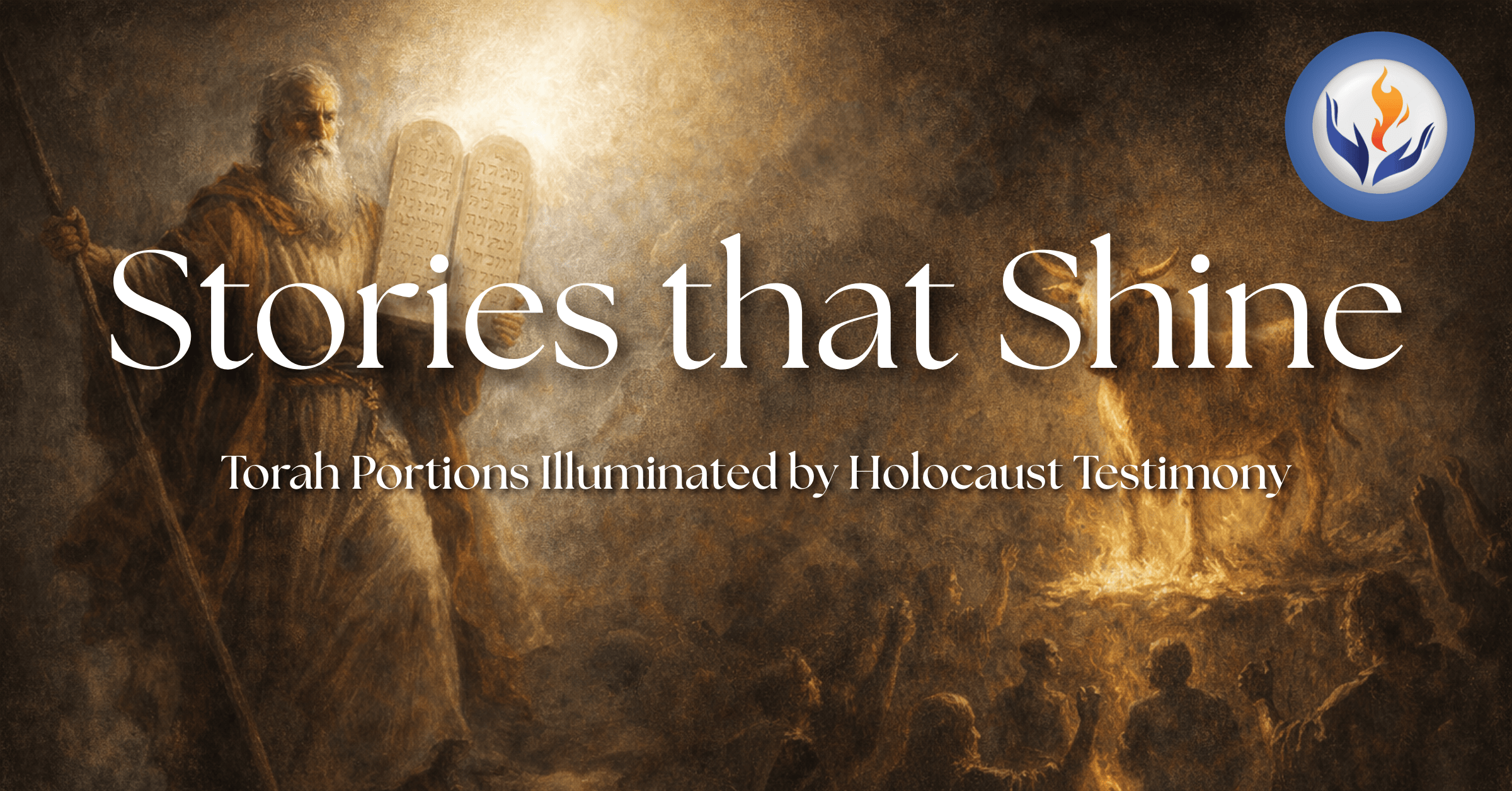
The formative and most important event of all occurred to the Jewish people on their way from Egypt to the Promised Land when God was giving them the Law. The Torah portion describes the tragic events of a nation waiting for Moses, the leader who was up on the mountain for forty days. They got restless and they wanted to make themselves an idol in the place of God.
“When the people saw that Moses was so long in coming down from the mountain, they gathered around Aaron and said, “Come, make us gods who will go before us. As for this fellow Moses who brought us up out of Egypt, we don’t know what has happened to him.” (Exodus 32:1 NIV)
This resulted in the shameful Golden Calf incident.
“When Aaron saw this, he built an altar in front of the calf and announced, “Tomorrow there will be a festival to the LORD.” (Exodus 32:5 NIV)
They went on to serve this idol. As Moses returned with his assistant, Joshua, they heard the noise from the camp. God wanted to punish the people, but Moses pleaded for them. This was one of the most serious incidents the Bible tells us about regarding the journey from Egypt.
“The LORD replied to Moses, “Whoever has sinned against me I will blot out of my book.” (Exodus 33:33 NIV)
Is it not so in our own lives that we are tired of waiting? We pray. And then we want to create our own gods when there is delay. Is it not so that this leads to behavior unbecoming of a believer? It is very humane to hurry to act. But what this incident clearly shows us is that impatience in terms of God’s timing does not lead to godly results.
Losing the Land
The prophetic portion is from Prophet Ezekiel, who lived in exile. It talks about the same kind of situation as with the Golden Calf. First there was idol worship, then there was a punishment which was the exile of the Jewish people from their land.
“So I poured out my wrath on them because they had shed blood in the land and because they had defiled it with their idols. I dispersed them among the nations, and they were scattered through the countries; I judged them according to their conduct and their actions.” (Ezekiel 36:18-19 NIV)
For the sake of His holy name, God would end their exile and bring them back to the land. God would also renew their spirit.
“For I will take you out of the nations; I will gather you from all the countries and bring you back into your own land. I will sprinkle clean water on you, and you will be clean; I will cleanse you from all your impurities and from all your idols. I will give you a new heart and put a new spirit in you; I will remove from you your heart of stone and give you a heart of flesh. And I will put my Spirit in you and move you to follow my decrees and be careful to keep my laws.” (Ezekiel 36:24.27 NIV)
Old and New
At the Holocaust Garden of Hope the last two exhibits are about the end of WWII and return to the Land of Israel, which from May 1948 became the State of Israel. This connects to prophet Ezekiel who lived in exile. Ezekiel spoke to the exiles in a place called Tel Aviv.
“I came to the exiles who lived at Tel Aviv near the Kebar River. And there, where they were living, I sat among them for seven days—deeply distressed.” (Ezekiel 3:15 NIV)
A modern Jewish city established in 1909 was given the name Tel Aviv. Its name in Hebrew means two words “Hill/Tell and Spring.” Thinking about these two words, we understand the deeper meaning. The first word would refer to an archeological tell or site and the second to something new. So it is ancient and new together. This also refers to the book Altneuland, in English, The Old New Land by Theodor Herzl. Herzl, the father of modern Zionism, wrote it in 1902.
Old and new – the Bible and current events. The story of Israel is not yet over. You choose if you want to be a part of its miracles!
*For an explanation of the terms see the first The Torah Portion Blog.
And God said, “Let there be light,” and there was light.
Genesis 1:3 NIV
Your word is a lamp for my feet, a light on my path.
Psalm 119:105 NIV
Arise, shine, for your light has come, and the glory of the LORD rises upon you.
Isaiah 60:1 NIV
…let your light shine before others, that they may see your good deeds and glorify your Father in heaven.
Matthew 5:16 NIV
Torah Scrolls were attacked and desecrated during the Holocaust. The enduring images of the Kristallnacht (November 9-10,1938) are those of synagogues on fire and Torah Scrolls burning. Some of these desecrated Torah Scrolls disappeared, others were buried. Some were lovingly rescued and are on display in museums in various locations.
[author] [author_image timthumb=’on’]https://irw.duv.temporary.site/website_047320a9/wp-content/uploads/2025/09/dr-k.jpg[/author_image] [author_info]Dr. Susanna Kokkonen received her Ph.D. in Holocaust Studies from the Hebrew University of Jerusalem. For ten years Dr. Kokkonen was the Director of the Christian Friends of Yad Vashem, World Holocaust Remembrance Center in Jerusalem. Dr. Kokkonen has authored several books about the Holocaust and antisemitism. She educates Christian audiences worldwide including about the Jewish roots of their faith. Dr. Kokkonen is the author of the exhibits for the Holocaust Garden of Hope and serves the Holocaust Remembrance Association as Educational Advisor. [/author_info] [/author]