November 13, 2025 – Dr. Susanna Kokkonen
Chayei Sarah 5786 (2025)
Genesis 23:1-25:18; 1. Kings 1: 1-31.
Chayei Sarah, the name of this Torah portion refers to Abraham’s wife and her days “Sarah’s Life.” The portion is part of the sabbath also known as Shabbat Mevarchim. This refers to blessings. This sabbath we bless the Hebrew calendar’s incoming month of Kislev.
Buying the Land
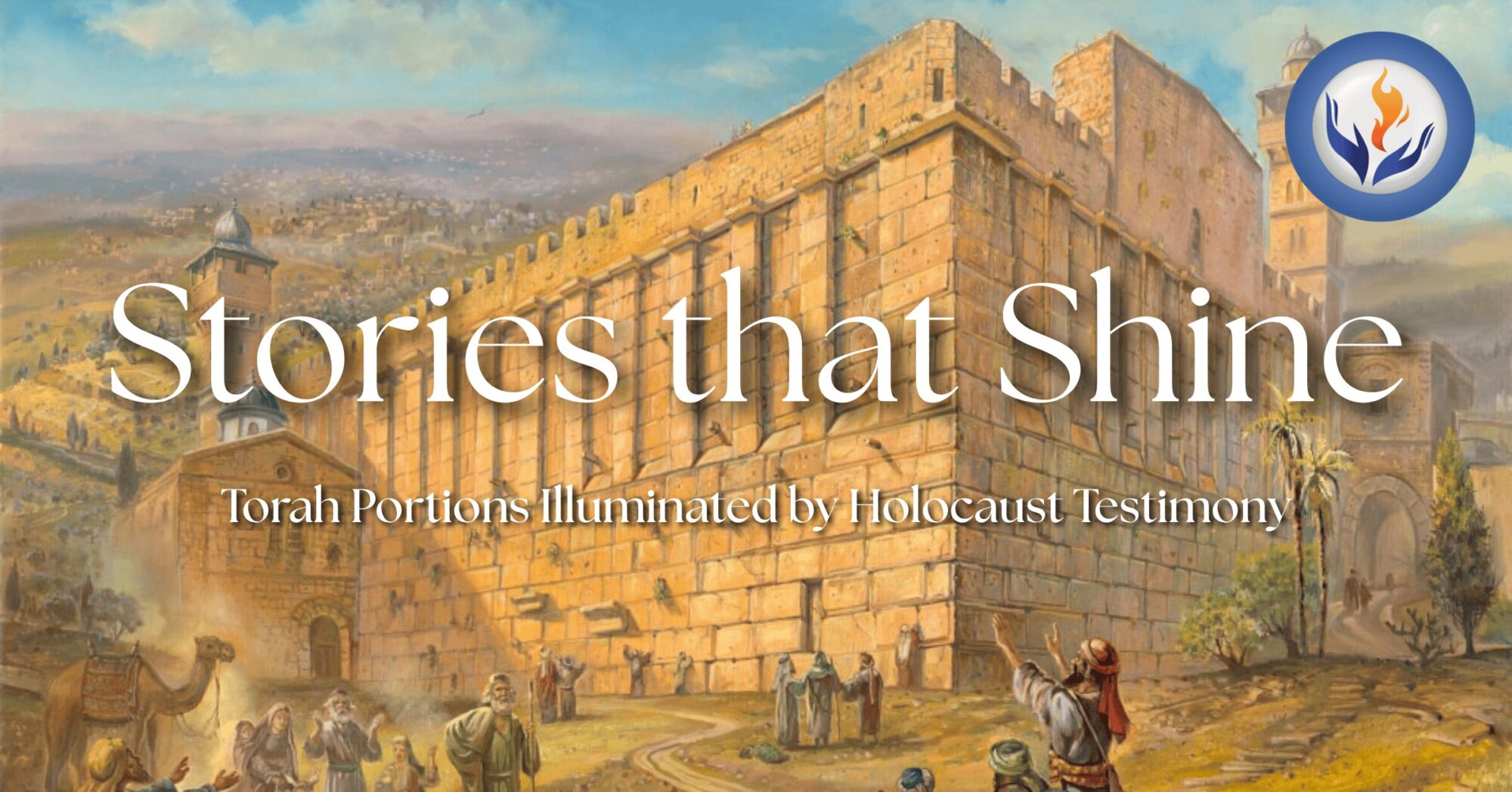
One of the most contested pieces of land in the Land of Israel is what we know as the city of Hebron. Hebron is the city of Abraham. In this Torah portion we see that the land was bought at a price and to be an everlasting possession. This was to be a burial place for the Jewish patriarchs and matriarchs. The transaction between Abraham and the owner of the cave he bought took place after Sarah’s death.
“Then Abraham rose from beside his dead wife and spoke to the Hittites. He said, “I am a foreigner and stranger among you. Sell me some property for a burial site here so I can bury my dead.” (Genesis 23:3-4 NIV)
The truth is that Abraham was offered the burial place for free. It was he who chose to pay a price for it.
“Listen to me, if you will. I will pay the price of the field. Accept it from me so I can bury my dead there.” Ephron answered Abraham,
“Listen to me, my lord; the land is worth four hundred shekels of silver, but what is that between you and me? Bury your dead.”
Abraham agreed to Ephron’s terms and weighed out for him the price he had named in the hearing of the Hittites: four hundred shekels of silver, according to the weight current among the merchants.
So Ephron’s field in Machpelah near Mamre—both the field and the cave in it, and all the trees within the borders of the field—was deeded
Abraham as his property in the presence of all the Hittites who had come to the gate of the city.” (Genesis 23:13-18 NIV)
The word Hebron in the Hebrew language is chevron, which has the same root as the Hebrew word chaver, friend. This is highly significant because Hebron became the city of Abraham. Abraham that was called God’s friend. The significance of the name of Machpela is particularly important here too. It refers to couples. And we know that the patriarchs were buried there with each of their wives. Jacob’s other wife, Rachel, was buried closer to Bethlehem in a different place.
Jewish roots in the land of Israel are very ancient. They have to do with these Biblical stories, and the significance of the Biblical connection is the reason for the controversy today. Abraham and his sons acquired the land legally in addition to God’s everlasting promises.
Rebeccah
Abraham was by now old and he knew that his days would soon be over. Having buried his wife, he wanted to find a wife for his son Isaac. He did not want Isaac to marry one of the local women. In the beautiful story, the faithful servant Eliezer went to look for Isaac’s wife from Haran. God provided the signs he requested. He knew Rebeccah to be the woman to bring back.
One interesting thing that is the case in this story is that following Sarah’s death, God never again spoke to Abraham. Rabbis have concluded that it was the marriage of Abraham and Sarah that was spiritually important. This should be the model for all marriages. Somehow God was working with Abraham when they were married.
“Abraham lived a hundred and seventy-five years. Then Abraham breathed his last and died at a good old age, an old man and full of years; and he was gathered to his people.
His sons Isaac and Ishmael buried him in the cave of Machpelah near Mamre, in the field of Ephron son of Zohar the Hittite, the field Abraham had bought from the Hittites. There Abraham was buried with his wife Sarah.” (Genesis 25: 7-10 NIV)
Interestingly, Abraham had known that there could be rivalry between the sons. They lived in distinct locations. He had given his property to Isaac, and gifts to Ishmael and the other children he had.
In this beautiful story, the two sons, Isaac and Ishmael, buried their father together.
Destruction in Family
In the related Haftarah portion we learn of an attempt against Salomon’s position as a future king. This is sibling rivalry. It is rebellion in David’s house and quite common in Biblical stories. Batsheba knew that Salomon, her son, was the rightful future king. Now another son Adonijah had declared himself the king. Batsheba hurried to meet King David.
“Bathsheba bowed down, prostrating herself before the king. “What is it you want?” the king asked.
She said to him, “My lord, you yourself swore to me your servant by the LORD your God: ‘Solomon your son shall be king after me, and he will sit on my throne.’
But now Adonijah has become king, and you, my lord the king, do not know about it. He has sacrificed great numbers of cattle, fattened calves, and sheep, and has invited all the king’s sons, Abiathar the priest and Joab the commander of the army, but he has not invited Solomon your servant.
My lord the king, the eyes of all Israel are on you, to learn from you who will sit on the throne of my lord the king after him.
Otherwise, as soon as my lord the king is laid to rest with his ancestors, I and my son Solomon will be treated as criminals.” (1. Kings 1: 1-21 NIV)
The story concluded with King David making Salomon very publicly the legitimate king and ruler.
“I will surely carry out this very day what I swore to you by the LORD, the God of Israel: Solomon your son shall be king after me, and he will sit on my throne in my place.” (1. Kings 1:30)
Two Sons
Jesus spoke about two sons. The story told by Jesus about two sons has these same elements in it. There is a fear of rejection and admittedly lack of righteousness in the younger son. This son left his home, whereas the older one worked faithfully for his father.
The father, however, had an inheritance for both of his children.
As the younger brother, having wasted everything returned home, the older son could not comprehend the events taking place. There was a party. Humanly speaking, the anger felt by the older brother is understandable. There were music, food, and joy – this was all too much. He asked the servants…why all this celebration?
“Your brother has come,’ he replied, ‘and your father has killed the fattened calf because he has him back safe and sound.’ “The older brother became angry and refused to go in. So his father went out and pleaded with him… ‘My son,’ the father said, ‘you are always with me, and everything I have is yours.” (Luke 15: 28-29,31 NIV)
The Holocaust Connection
There is a remarkable story told in the Holocaust Garden of Hope exhibits about a survivor, Rozalie’s uncle Miki, on the ship Altalena in 1948.
The young State of Israel had a government led by Prime Minister David Ben Gurion. There was one army, the Haganah. But during the fight for independence, in years preceding independence, there had been other military groups in the country. These other organizations were now bringing arms onboard the ship Altalena to Israel, demanding their share of the same arms.
Their leader was Menachem Begin, later to become another Prime Minister of Israel. Ben Gurion did not want two military groups or two governments. He ordered the sinking of the ship. Many people died. Begin, despite the evident humiliation, upheld the law. Begin requested that his own fighters not fight back for the arms. This act prevented a civil war – a war between brothers- in the newly born state.
We live in complex reality. There are many divisions and much anger in society.
Let this be a lesson for all of us personally. Let it be a lesson for our nations struggling with division, polarization, and hate. Sometimes we need to be humble even when we are right.
*For an explanation of the terms see the first The Torah Portion Blog.
And God said, “Let there be light,” and there was light.
Genesis 1:3 NIV
Your word is a lamp for my feet, a light on my path.
Psalm 119:105 NIV
Arise, shine, for your light has come, and the glory of the LORD rises upon you.
Isaiah 60:1 NIV
…let your light shine before others, that they may see your good deeds and glorify your Father in heaven.
Matthew 5:16 NIV
Torah Scrolls were attacked and desecrated during the Holocaust. The enduring images of the Kristallnacht (November 9-10,1938) are those of synagogues on fire and Torah Scrolls burning. Some of these desecrated Torah Scrolls disappeared, others were buried. Some were lovingly rescued and are on display in museums in various locations.
[author] [author_image timthumb='on']https://irw.duv.temporary.site/website_047320a9/wp-content/uploads/2025/09/dr-k.jpg[/author_image] [author_info]Dr. Susanna Kokkonen received her Ph.D. in Holocaust Studies from the Hebrew University of Jerusalem. For ten years Dr. Kokkonen was the Director of the Christian Friends of Yad Vashem, World Holocaust Remembrance Center in Jerusalem. Dr. Kokkonen has authored several books about the Holocaust and antisemitism. She educates Christian audiences worldwide including about the Jewish roots of their faith. Dr. Kokkonen is the author of the exhibits for the Holocaust Garden of Hope and serves the Holocaust Remembrance Association as Educational Advisor. [/author_info] [/author]