
October 31, 2025 – Dr. Susanna Kokkonen
Vayeira 5786 (2025)
Genesis 18:1-22:24; 2. Kings 4:1-37
Vayeira, the name of this Torah portion means that “He appeared”. The person this refers to is God Himself appearing at Abraham’s tent.
Hospitality
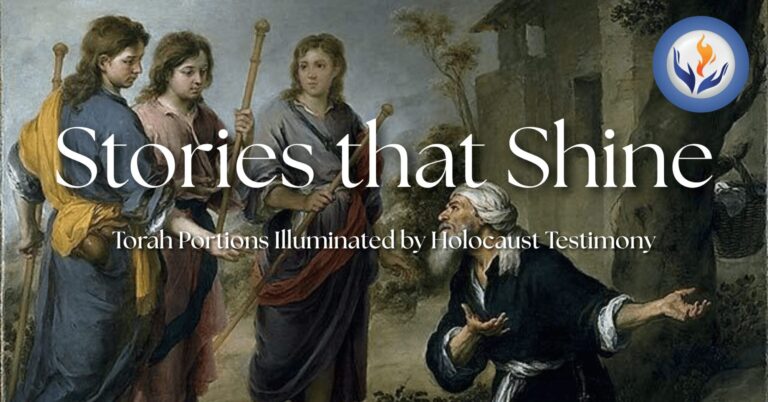
At the beginning of the portion, there was an encounter Abraham had with three men. As soon as he saw them, Abraham rushed to show hospitality.
“He said, “If I have found favor in your eyes, my lord, do not pass your servant by. Let a little water be brought, and then you may all wash your feet and rest under this tree. Let me get you something to eat, so you can be refreshed and then go on your way—now that you have come to your servant.” “Very well,” they answered, “do as you say.” (Genesis 18:3.5 NIV)
Here I would like to draw our attention to the New Testament. Clearly, Abraham’s hospitality is something we should aspire to.
“Do not forget to show hospitality to strangers, for by so doing some people have shown hospitality to angels without knowing it.” (Hebrews 13:2 NIV)
And it was following Abraham’s showing of hospitality to his guests that a special promise was given to him.
“Then one of them said, “I will surely return to you about this time next year, and Sarah your wife will have a son.” (Genesis 18:10 NIV)
Humanly speaking we understand how incredulous Sarah must have been.
“Abraham and Sarah were already very old, and Sarah was past the age of childbearing. So Sarah laughed to herself as she thought, “After I am worn out and my lord is old, will I now have this pleasure?” (Genesis 18:11-12 NIV)
But, incredulity is never the right response when God promises us things, however impossible they may seem.
“Then the LORD said to Abraham, “Why did Sarah laugh and say, ‘Will I really have a child, now that I am old? ‘Is anything too hard for the LORD? I will return to you at the appointed time next year, and Sarah will have a son.” (Genesis 18:13-14 NIV)
Indeed, this promise happened.
Destruction and Mercy
Following the encounter at Abraham’s tent, the men left. But it was here God informed Abraham of His plans to first inspect, then possibly destroy the cities of Sodom and Gomorrah, where people had become exceedingly wicked.
“Then the LORD said, “The outcry against Sodom and Gomorrah is so great and their sin so grievous that I will go down and see if what they have done is as bad as the outcry that has reached me. If not, I will know.” (Genesis 18:20-21 NIV)
It is here, at a moment of crisis, that we get to see Abraham’s character. Surely he knew the wickedness of those places and their people. But what did he do? In a loving act, he asked for mercy appealing to God’s righteousness.
“Then Abraham approached him and said: “Will you sweep away the righteous with the wicked?” (Genesis18:23 NIV)
In fact, we know that God did not destroy the righteous with the wicked. He took out Abraham’s nephew Lot from Sodom before it was destroyed.
“When he hesitated, the men grasped his hand and the hands of his wife and of his two daughters and led them safely out of the city, for the LORD was merciful to them.” (Genesis 19:16 NIV)
Praying for the other
In this Torah portion, Abraham and Sarah encountered a dangerous situation of another kind. Avimelech, a foreign king took Sarah to his property, to marry her. This was due to Abraham saying that Sarah was his sister. God saw the escalating situation and in His mercy prevented Avimelech from sinning.
There is an intriguing and often overlooked detail in the story. God had already acted on behalf of and because of Sarah against the king’s household.
“Then Abraham prayed to God, and God healed Abimelek, his wife and his female slaves so they could have children again, for the LORD had kept all the women in Abimelek’s household from conceiving because of Abraham’s wife Sarah.” (Genesis 20:17-18 NIV)
Abraham and Sarah had waited for a son for a long time. Now, they were praying for that very thing for a foreign king and his household. It is from here we get a Biblical principle. One is to pray for others to have the very thing one needs. This may hasten the answer to everyone’s needs.
“Sarah became pregnant and bore a son to Abraham in his old age, at the very time God had promised him.” (Genesis 21:2 NIV)
Provision
In the corresponding Haftarah portion, we learn about a woman, who was losing everything to debtors.
“The wife of a man from the company of the prophets cried out to Elisha, “Your servant my husband is dead, and you know that he revered the LORD. But now his creditor is coming to take my two boys as his slaves.”
Elisha replied to her, “How can I help you? Tell me, what do you have in your house?” “Your servant has nothing there at all,” she said, “except a small jar of olive oil.”
Elisha said, “Go around and ask all your neighbors for empty jars. Don’t ask for just a few. Then go inside and shut the door behind you and your sons. Pour oil into all the jars, and as each is filled, put it to one side.” (2. Kings 4:1-4 NIV)
The woman took the prophet at his word and started filling every jar she had. There was not too little nor too much.
“When all the jars were full, she said to her son, “Bring me another one.” But he replied, “There is not a jar left.” Then the oil stopped flowing.
She went and told the man of God, and he said, “Go, sell the oil and pay your debts. You and your sons can live on what is left.” (2. Kings 4:6-7 NIV)
The story is about God providing. But it is also about a woman’s faith. Had the woman not believed the word, the miracle would not have taken place. In addition to believing, she had to act. Without these two, she would have perished.
Your faith has made you well.
Similarly, in the New Testament, Jesus often said to people that “their faith had made them well.” The first time Jesus said this, was when a woman with bleeding touched the hem of His garment.
“Just then a woman who had been subject to bleeding for twelve years came up behind him and touched the edge of his cloak.
She said to herself, “If I only touch his cloak, I will be healed.”
Jesus turned and saw her. “Take heart, daughter…your faith has made you well.” (Matthew 9:20-22 NIV)
It seems to me that faith preceded seeing the miracle. Jesus acknowledged her faith and healed her.
The Holocaust Connection
There is a remarkable story of the Ten Boom Family living in Harlem, Holland during the Holocaust. Their old father Casper, as well as the two daughters Cornelia, better known as Corrie, and Betsie Ten Boom, became involved in the Dutch resistance by saving Jews. The Ten Booms even had a hiding place built in their house.
What is so remarkable is that (like the woman Elijah met) they had to depend on God for all they needed for feeding and hiding so many (hundreds) people. There had to be others who helped them with food; there had to be people who were able to take the hunted Jews to other, safer places. But even more so, they needed courage daily. Courage came from the knowledge that they were doing what was right. This was the only way to face the dangers under German occupation of Holland.
For over one hundred years there had been prayers for the Peace of Jerusalem in their home. So it was the power of those prayers and the ensuing faith that was enough. It was enough even for such grim times and dangerous activities. That faith was there even when horrifyingly Gestapo arrested them.
There is a promise:
“And my God will supply every need of yours according to His riches…” (Phil. 4:19 NIV)
Let us continue in prayer and in faith
*For an explanation of the terms see the first The Torah Portion Blog.
And God said, “Let there be light,” and there was light.
Genesis 1:3 NIV
Your word is a lamp for my feet, a light on my path.
Psalm 119:105 NIV
Arise, shine, for your light has come, and the glory of the LORD rises upon you.
Isaiah 60:1 NIV
…let your light shine before others, that they may see your good deeds and glorify your Father in heaven.
Matthew 5:16 NIV
Torah Scrolls were attacked and desecrated during the Holocaust. The enduring images of the Kristallnacht (November 9-10,1938) are those of synagogues on fire and Torah Scrolls burning. Some of these desecrated Torah Scrolls disappeared, others were buried. Some were lovingly rescued and are on display in museums in various locations.
[author] [author_image timthumb='on']https://irw.duv.temporary.site/website_047320a9/wp-content/uploads/2025/09/dr-k.jpg[/author_image] [author_info]Dr. Susanna Kokkonen received her Ph.D. in Holocaust Studies from the Hebrew University of Jerusalem. For ten years Dr. Kokkonen was the Director of the Christian Friends of Yad Vashem, World Holocaust Remembrance Center in Jerusalem. Dr. Kokkonen has authored several books about the Holocaust and antisemitism. She educates Christian audiences worldwide including about the Jewish roots of their faith. Dr. Kokkonen is the author of the exhibits for the Holocaust Garden of Hope and serves the Holocaust Remembrance Association as Educational Advisor. [/author_info] [/author]